Search Premiere Landscape, Inc. for a plant

Dave's Garden PlantFiles search engine

Find your plant by searching PlantFiles:
-

Premiere Landscape, Inc.

Showing posts with label Butterfly Vine. Show all posts

Thursday, September 22, 2011

Pipevine - Aristolochia tomentosa


Pipevine - Aristolochia tomentosa

Aristolochia macrophylla

Aristolochia durior


Pipevine is a vigorous, climbing woody vine without tendrils. It has pipe shaped flowers and large, heart-shaped leaves. The flowers are about 3 cm long and curved, kind of like a pipe. It blooms from May to June. The fruit of the plant has a diameter of about 3 cm. It tends to like somewhat shady to sunny areas. It is native to most of the southeastern U.S. and grows best in full sun or partial shade and will need a trellis, fence or arbor to grow on. It can grow to be as tall as 20-30 feet!

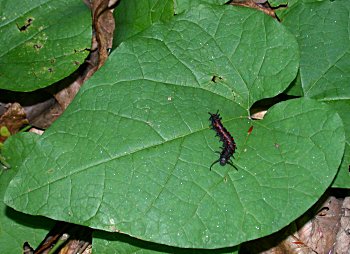
Pipevine is a Host Plant for the Pipevine

Swallowtail

Pipevine Swallowtails (Battus philenor) use Pipevine as a host plant. The butterfly Battus polydamas, whose range includes most of the south eastern US also uses some species of Aristolochia as a host plant.

Vines of the Aristolochia genus are poisonous because they contain aristolochic acids which are toxic alkaloids. Pipevine Swallowtails are immune - their caterpillars sequester the toxins which then make them undesirable to predators even as adults.

Both Aristolochia durior and Aristolochia tomentosa are used by the butterfly. Aristolochia elegans is however poisonous to them, the adults might lay eggs on it but the caterpillars will die.

Thursday, February 18, 2010

Mascagnia macroptera


Mascagnia macroptera


Yellow Orchid Vine, Yellow Butterfly Vine, Gallinita


Synonym:Callaeum macroptera

Stigmaphyllon ciliatum
( Stigmaphyllon )


Family: Malpighiaceae

Genus: Mascagnia (mas-KAYN-ee-a)
Species: macroptera (mak-roh-TER-uh)


Category:
Vines and Climbers

Height:
12-15 ft. (3.6-4.7 m)

Spacing:
12-15 ft. (3.6-4.7 m)

Hardiness:
USDA Zone 9a: to -6.6 °C (20 °F)
USDA Zone 9b: to -3.8 °C (25 °F)
USDA Zone 10a: to -1.1 °C (30 °F)
USDA Zone 10b: to 1.7 °C (35 °F)

Sun Exposure:
Full Sun

Danger:
N/A

Bloom Color:
Bright Yellow

Bloom Time:
Mid Spring
Late Spring/Early Summer
Mid Summer

Foliage:
Deciduous

Other details:
Average Water Needs; Water regularly; do not overwater

Soil pH requirements:
5.6 to 6.0 (acidic)
6.1 to 6.5 (mildly acidic)
6.6 to 7.5 (neutral)
7.6 to 7.8 (mildly alkaline)

Patent Information:
Non-patented

Propagation Methods:
From seed; direct sow after last frost

Seed Collecting:
Allow pods to dry on plant; break open to collect seeds

Followers

LABEL REFERENCE